
By Danielle Beaudet, art therapist
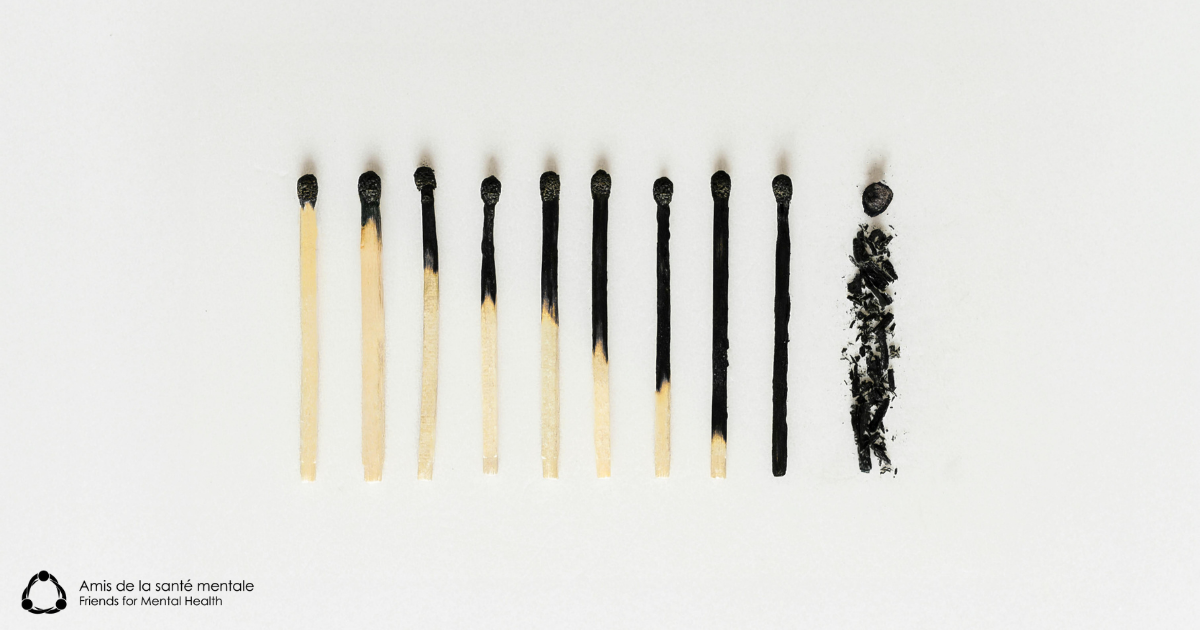
When we support a loved one on a daily basis, we give a lot: time, energy, heart. We do it out of love, out of a sense of responsibility, and sometimes simply because there is no one else to do it. Yet, little by little, we may begin to disappear from our own lives. Fatigue sets in, patience wears thin, and everything starts to feel overwhelming. This is when caregiver burnout can take hold, often quietly, without warning.
In The Caregiver’s Empowerment Handbook, Rev. Dr. Geraldine L. Johnson-Carter describes this phenomenon not as a sign of weakness, but as an alarm signal. It is the body and mind saying they can no longer carry such a heavy load alone.
Burnout happens when caring loses its meaning and becomes automatic. When you wake up already exhausted. When you drift away from yourself without even realizing it.
The good news is that burnout is not inevitable. It can be prevented, if we learn to recognize the warning signs and rebalance the scale between caring for others and caring for ourselves.
Here are a few reflections inspired by the book:
1. Reconnect with your “why”: Remember why you help, beyond guilt or obligation. Reconnecting with meaning can help rekindle the bond and prevent care from becoming a burden rather than an act of love.
2. Recognize the warning signs: Irritability, emotional withdrawal, sleep disturbances, or a sense of inner emptiness are not personal failures. They are messages. Listening to them early is a powerful form of self-protection.
3. Learn how to restore yourself: Rest is not a luxury. It is essential. It may look like a few quiet minutes, a moment of silence, a walk, or an unrushed meal. These simple acts nourish our capacity for empathy and presence.
4. Seek support: No caregiver should feel alone in their role. Sharing your experience, asking a friend for help, joining a support group, connecting with a community organization, or speaking with a professional are acts of courage, not failure.
5. Remember that balance is always moving: A caregiver’s well-being is not something achieved once and for all. It shifts and evolves, day by day. It is not a quest for perfection, but for humanity.
In the end, preventing burnout means honoring both the person receiving care and yourself. Because you cannot pour from an empty cup. Taking care of yourself is not stepping away from your loved one. It is giving yourself the means to keep loving without losing yourself.